


Pile foundation
A pile foundation transfers loads into load-bearing ground when the soil directly beneath the structure can't. The first of three steps is the borehole.
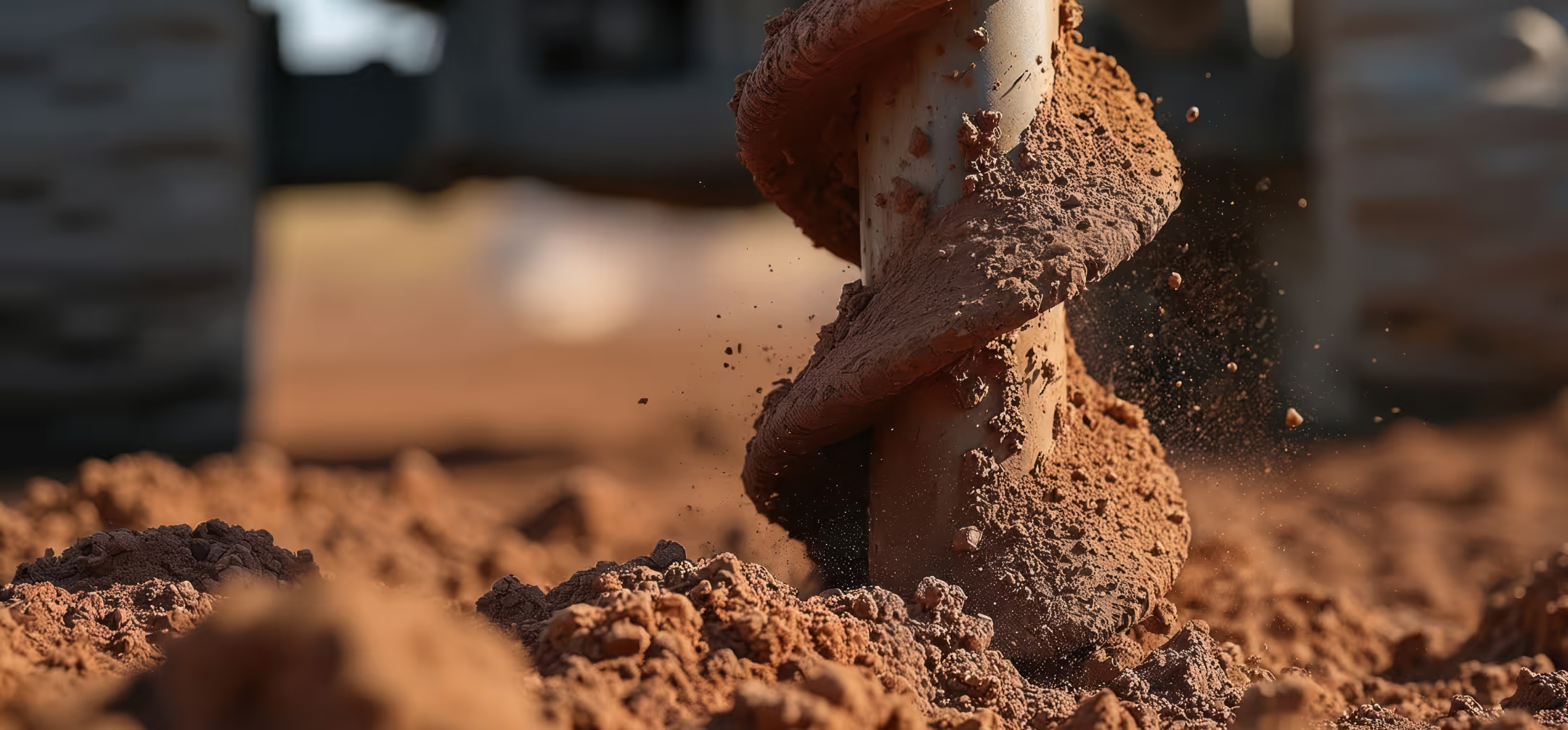
Where drilling takes place
Bored piles, micropiles, small-diameter piles
Bored piles to DIN EN 1536 typically have diameters from 30 centimetres and carry the main load of a structure. They are usually made with casing so that the borehole stays open until the concrete is poured.
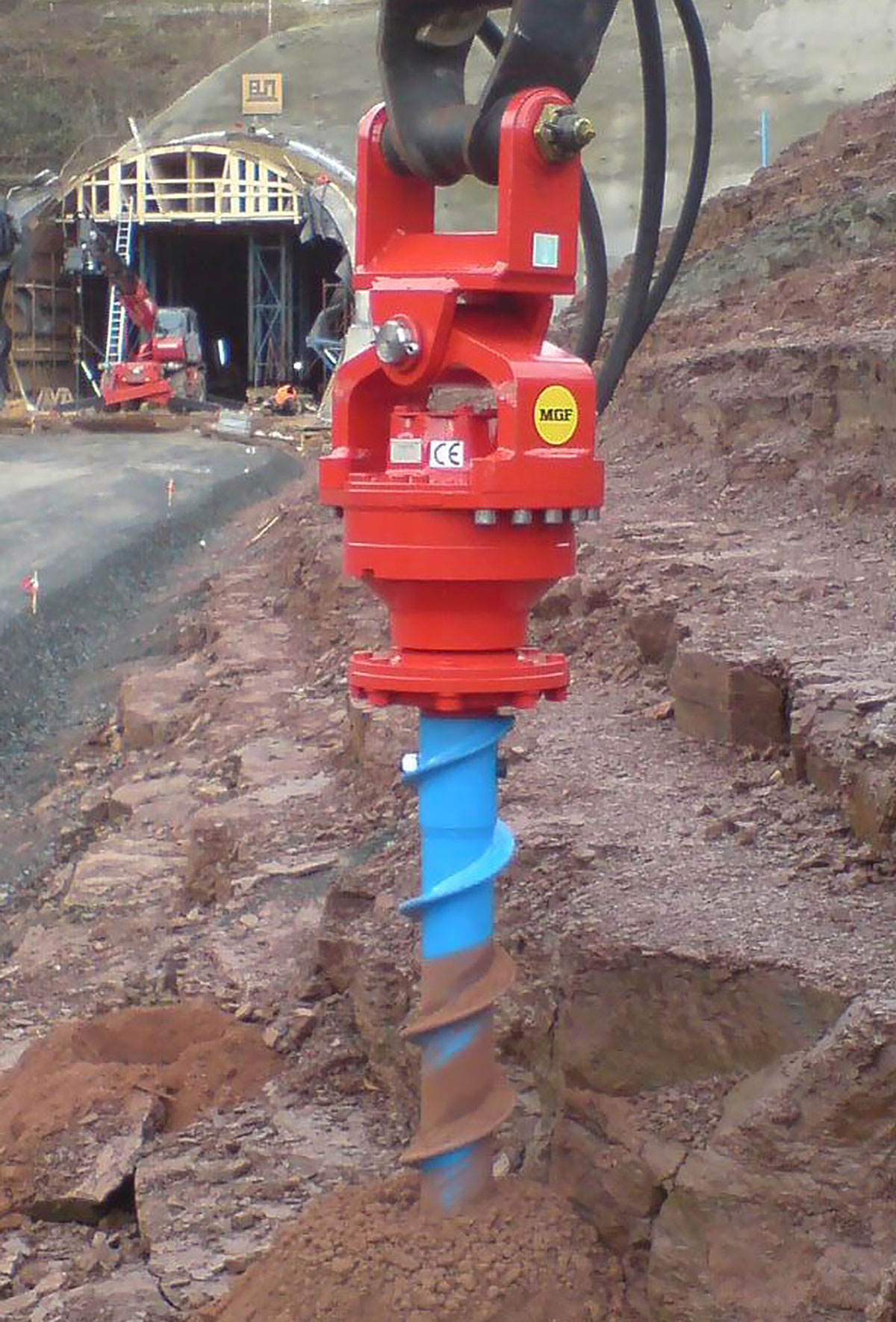
Micropiles and small-diameter bored piles have smaller diameters and are used where large machines can't get to or where foundations have to be added later. They are the method where an excavator-mounted drive outperforms a special drilling rig.
Pile foundations with limited headroom
Under railway overhead lines, under bridges, in halls and underground car parks, there is a height restriction that rules out any conventional drilling rig with a mast. An excavator-mounted drill motor doesn't need a mast: the overall height is determined by the drive and the tool, not by a machine structure. For founding bridge piers and abutments, for underpinning existing structures and for work in railway areas, that is often the difference between “with special equipment” and “with the excavator that is already there”.
Why it is demanding
- Depth is decisive. A bored pile isn't finished faster by turning faster, but by a drive that doesn't give up in natural ground.
- Headroom is often limited. Under bridges, overhead lines and hall ceilings, any machine with a mast is ruled out.
- Drilling is cased. Where concrete is poured while the casing is pulled, the concrete needs a way through the shaft.
How and why an MGF drill motor is used here
Torque over the full depth
The hydraulic drive delivers its torque via the oil pressure and stays powerful as the speed drops. That is exactly what a bored pile in natural ground demands.
No mast, no height restriction
The overall height is determined by the drive and the tool. That is why MGF drives are used in micropiling and under bridges.
Cased drilling with media feed
The hollow-shaft models feed water, air or concrete through the shaft – for piles that are concreted while the casing is pulled.
One drive, several sites
Because it belongs to the boom rather than to a machine, the drive moves along with it – from the pile to the shoring beam to the mast foundation, without having to rent a new machine.
Which model for which piling task
| Task | Torque | MGF models |
|---|---|---|
| Micropiles and small-diameter bored piles | 4,800 – 10,800 Nm | BG 480 · BG 800 · BG 1080 |
| Medium bored piles, standard foundations | 17,800 – 26,800 Nm | BG 1780 · BG 1920 · BG 2680 |
| Large bored piles, firm soils | 32,000 – 38,400 Nm | BG 3200 · BG 3840 |
| Large-diameter bored piles in continuous use | 53,000 – 76,000 Nm | BG 5300 · BG 7600 |
| Cased piles with media feed | 15,360 – 51,200 Nm | the H series |
Drive and tools from one source
The drive comes with the tools: augers and hollow-stem augers for excavation, casing pipes and clamping jaws for cased piles, ring bits for the casing shoe, flushing heads for flush-assisted methods.

Frequently asked questions
In three steps: drill, reinforce, pour concrete. Drilling is usually cased so that the hole stays stable. Then the reinforcement cage is inserted and concrete is poured while the casing is pulled. The rules for this are set out in DIN EN 1536.
The diameter and therefore the load-bearing capacity. Micropiles are slimmer but are installed in greater numbers and reach places a large drilling rig can't, for example when underpinning existing buildings.
Yes, with a method that works without a mast. An excavator-mounted drill motor only needs the height of the drive and the tool.


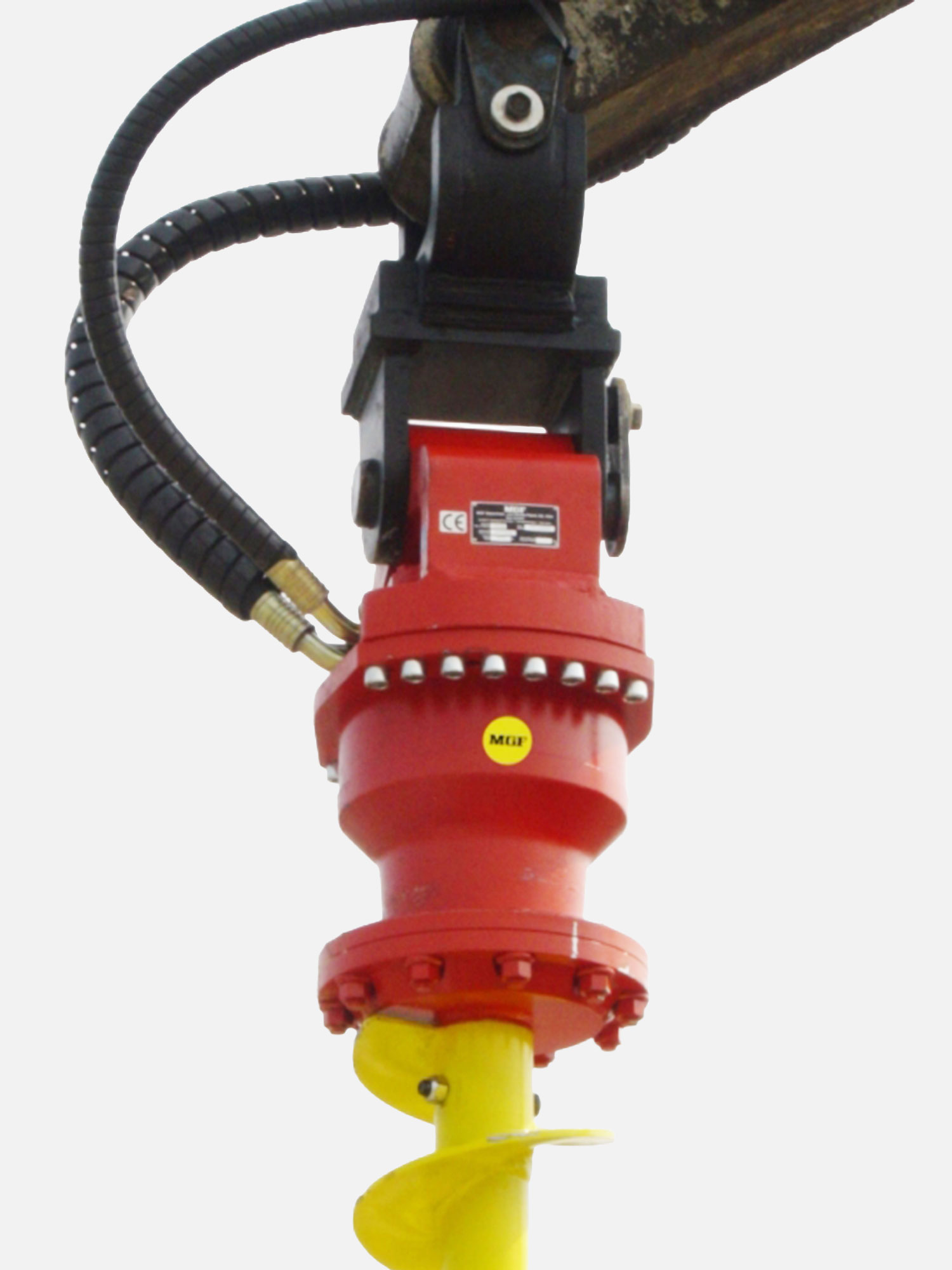
Which drive suits your excavator?
Tell us your machine, oil pressure and oil flow. We will size the drive.
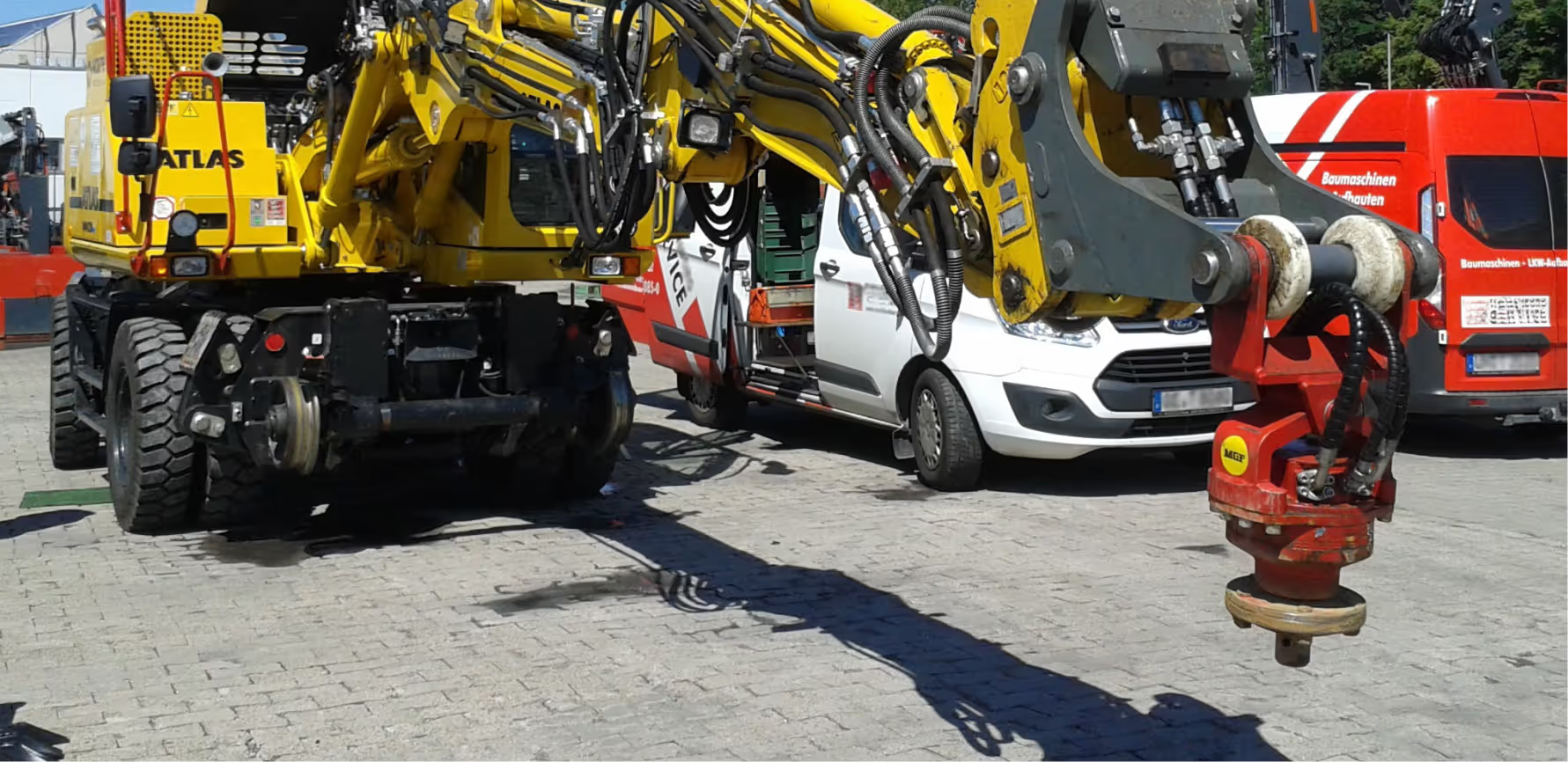


Get advice now — and find the right model
Discover the benefits of our low-maintenance, hydraulic earth drilling rigs. Let our experts advise you on this.


Site created by famesites